Showing posts with label Open Records. Show all posts

Saturday, October 13, 2012

October 13, 2012 Comptroller Justin Wilson Proposes Waiving First $25 in Fees for Public Records Requests Submitted to His Office

State Comptroller Justin Wilson has proposed waiving the first $25 in fees for public records requests to his office. Wilson's proposal was unanimously recommended for adoption by the Joint Government Operations Committees last week.  Click here


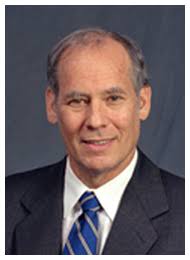
TENNESSEE STATE COMPTROLLER JUSTIN WILSON
 
Frank Gibson, former director of Tennessee Coalition on Open Government (TCOG), praised the decision. TCOG promotes transparency in government.
 
The move is apparently motivated by a desire to promote open government and concerns about efficiency. 
 
Wilson may choose to waive all fees on a case-by-case basis. "I'm absolutely in favor of open records, but I don't want it to be abused," Wilson said. "If there are excessive requests, you need to pay for it."
 
While the Public Records Act does not require local and state governments to charge citizens for  access to public records, many governmental entities have adopted rules on assessing fees for copies of documents. 
 
"The public feels like it is already paying to collect, store and provide records," Gibson said. "Fee waivers are a way to recognize that sentiment."
 
The proposed waiver is being adopted by and only applies to the Comptroller's Office. 
 

Saturday, March 06, 2010

March 6, 2010 Chancellor Says State TNInvestco Records Can Remain Sealed For Five Years

Nashville Chancellor Russell Perkins has sided with the State of Tennessee's request to keep certain  economic and community development documents away from citizen scrutiny. Perkins recently ruled that Tennessee officials don’t have to disclose the documents that would show how six firms were scored and selected to participate in the $120 million Tennessee Small Business Investment Company Credit Act. Perkins' ruling does not kept the records permanently from the public. The state has five years to release the details. A good discussion and access to court filings is here.  The Tennessean article is here.

In keeping the records out of the public domain, Perkins labeled as "sensitive" those TNInvestco records kept by Matthew Kisber, state commissioner of Economic and Community Development, and Reagan Farr, commissioner of the Department of Revenue. See my previous blog post. The records request was filed by Larry Coleman, a businessman who wanted to see how Tennessee officials scored and selected six companies to participate in the TNInvestco program.  Coleman's firm was not selected.

Coleman vowed to appeal the ruling. “The more light we can shine on this process, the better off we’re going to be as taxpayers,” he said.

After the ruling, Kisber commented: "We fully understand the need for open government, and we are committed to upholding that principle while balancing the need of our state to maintain a competitive posture, as we seek to attract new investment and create jobs for the people of Tennessee.”

The TNInvestco program was passed last year as a way to promote economic development. The program allowed the state to sell $120 million worth of tax credits to six investments firms at a discounted rate of $84 million.  Each of the six winners was eligible for the $20 million of tax credits in order to invest in startup and mid-stage companies. The stated purpose is for TNInvestco to spur economic development and create jobs.

State officials have hailed the program as a way to bring jobs to Tennessee. Critics of similar programs in other states have claimed that they wind up enriching the venture capital funds while creating few jobs.

Thursday, February 18, 2010

February 18, 2010 State of Tennessee: Accountability for Selection of Companies Handling $120 Million of Insurance Premium Tax Credits

A lawsuit is being heard in Nashville over access to records related to TNInvestco, a program established by the General Assembly in 2009 as the Tennessee Small Business Investment Company Credit Act. The law established a base of $120 million of insurance premium tax credits that six investment firms certified by the state can sell to insurance companies who then invest the proceeds into Tennessee small businesses.

The law gives Economic and Community Development Commissioner Matt Kisber and Revenue Commissioner Farr Reagan sole discretion to choose the TNInvestco participants.

Larry Coleman, an investment company executive, wants to see how Kisber and Farr graded the 25 TNInvestco applicants. Coleman also wants to see the documents showing that the chosen investment companies raised the required capital by selling the tax credits. 

The state has filed dozens of records related to TNInvestco under seal, saying the documents constitute “tax information” or “tax administration information” and thus are exempt from Tennessee's Open Records law.

Taxing Tennessee--one of the best blogs in the state of Tennessee--has a post.

The Tennessee Center for Policy Research has a good explanation here.

When six companies are chosen singlehandedly by two people to handle a state program involving large sums of money, there should be some level of outside oversight and accountability for administration of the program in order to ensure that the companies have performed their duties as required by law and that the companies were selected on the basis of identifiable criteria, not on the basis of friendships, "donations," or political factors/favors.

Tuesday, March 17, 2009

March 17, 2009 Sunshine Week and Open Meetings Act Lawsuits in Hamblen County: Then and Now

March 15-21 is Sunshine Week in Tennessee. Usually, the local newspaper carries a series of front-page articles during Sunshine Week about openness in government, noting the importance of Tennessee's Open Meetings and Open Records Acts in ensuring open and accountable government. [Update: Thanks to Michael Silence for steering readers to this post]

Newspapers have traditionally been major proponents of open government, and there are some newspapers today who still continue the proud tradition of the press as guardian and protector of the public's right to know when government meetings are taking place and right to access to public records.

In this area, the Knoxville News-Sentinel has continued the tradition of the press as guardian and protector of open government. To protect the public from backroom deals and secret meetings, the Sentinel filed an Open Meetings lawsuit in 2007 against the Knox County Commission. The lawsuit resulted in an important victory for open government not only for the News-Sentinel but also for the people of Knox County.

And one time many years ago, the local Citizen-Tribune took the lead in exposing and stopping violations of the Open Meetings Law by the Morristown Civil Service Board.

The Tribune, a part of Lakeway Publishers, filed an Open Meetings lawsuit against the Morristown Civil Service Board some 15+ years ago. The Tribune asked for an injunction against the Civil Service Board to prevent secret deliberations and future violations of the Act and the Tribune asked that costs be assessed against the Board.

The Tribune won that battle, but only because it was willing to file suit on behalf of the public and the press.

What happens when there are local violations today?

In December of 2008, the Hamblen County Ethics Committee violated the Open Meetings Act by not providing notice to the public of its December 15 meeting. [Yes, as many have people have mentioned to me, there is real irony in the Ethics Committee violating state law.]

On January 22, during the public comments portion of the meeting of the county commission, Ethics Chair Joe Swann, Ethics member Stancil Ford, Ethics attorney Rusty Cantwell, and the full commission were informed of the Open Meetings violation by the Ethics Committee and the Ethics Committee was asked to correct the violation.

A Tribune reporter was present. However, in the Tribune's coverage of the commission meeting, the alleged Open Meetings violation by the Ethics Committee was not mentioned nor were comments or responses from any Ethics Committee member reported.

With no concern, questions, or reporting by the press, the Ethics Committee just ignored and denied the violation. While I would hope that the Tribune is still as concerned about the Open Meetings Act as it was fifteen years ago when it filed its own Open Meetings lawsuit, that just doesn't appear to be the case today.

Stonewalling by the Ethics Committee left only one way to enforce the Open Meetings Act--a citizen lawsuit. The citizen lawsuit was filed on February 17, 2009, only after the Ethics Committee continued to refuse to admit and correct its violation.

After the lawsuit was filed, the Ethics Committee quit ignoring and denying its violation and held a re-do meeting on March 11.

At the Ethics Committee re-do meeting, Bill Brittain, a member of the Ethics Committee, recused himself from the vote regarding discipline of Frank Parker and Paul King after being questioned about a conflict of interest regarding Frank Parker.

The more things change, the more they stay the same.

Fifteen years ago, the Morristown Civil Service Board violated the Open Meetings Act but did nothing about its violation until forced to do so as a result of an Open Meetings lawsuit filed by the Tribune.

In December 2008, the Hamblen County Ethics Committee violated the Open Meetings Act but did nothing about its violation until forced to do so as a result of an Open Meetings lawsuit filed by a citizen.

Some helpful links on Open Government in Tennessee: Tennessee Coalition for Open Government. Tennessee Press Association.

Saturday, March 07, 2009

March 7, 2009 After Lawsuit Is Filed, Ethics Committee Wants To Correct Its Violation of Tennessee Open Meetings Act

In a previous post, I reported that the Hamblen County Ethics Committee violated the Tennessee Open Meetings Act (TOMA) by not providing notice to the "public" of its December 15, 2008, "public" meeting.

Commissioner Joe Swann, who is chairman of the Ethics Committee, Commissioner Stancil Ford, a member of the Ethics Committee, and Rusty Cantwell, attorney for the Ethics Committee, were put on notice of this violation during the public comments portion of the January 22 meeting of the Hamblen County Commission.

Fortunately, the TOMA provides a very simple way to fix such a violation--- just "re-do" the meeting with adequate notice to the public and then re-consider and fully deliberate again on the public business in a true public meeting. On January 22, the Ethics Committee was requested to re-do its December 15 meeting with proper notice to the public.

Unfortunately, the Ethics Committee chose to deny the violation and ignored the request to correct the situation. With the Ethics Committee stonewalling and refusing to remedy its violation, the only way left to enforce the Open Meetings Act was for a citizen to file suit against the violators.

After waiting weeks and weeks for the Ethics Committee to do the easy thing, the right thing, the "ethical" thing---call another meeting with proper notice to the public---Gwen Holden filed a citizen's suit against the Ethics Committee and its five members on February 17, 2009. I represent Ms. Holden.

After being served with Ms. Holden's lawsuit, the Ethics Committee rather suddenly decided that a "re-do" meeting sounded pretty good after all. The Ethics Committee "re-do" meeting to correct its violation of the Open Meetings Act is set for Wednesday, March 11, at 4:00 pm in the West Wing Conference Room in the basement of the new portion of the Courthouse.

The March 11 agenda includes review of the disciplinary actions taken by Mayor David Purkey against county employees Paul King and Frank Parker who were indicted for felony theft (Parker and King) and felony misconduct (Parker) in May 2008.

Government at its best. The Ethics Committee violates the law. Refuses to admit that it did anything wrong. Ignores a simple request to fix the violation with a "re-do" meeting. Then, after its bluff is called and a lawsuit is filed, suddenly the Ethics Committee thinks that a "re-do" sounds great after all!

It is ironic that a violation such as this would involve the Ethics Committee.

It is unfortunate that the Ethics Committee, faced with an obvious violation of the Open Meetings Act, got its back up and refused to admit the violation and simply correct it. This could have been taken care of right away--at no-cost to the taxpayers--if the Ethics Committee had said 'oops, we're sorry and we're going to fix this right now with a proper meeting with adequate public notice.'

Now, the Ethics Committee and its members will ask the taxpayers of Hamblen County to pay the legal fees that the Ethics Committee has incurred for a lawsuit that they caused by their refusal to correct their Open Meetings violation at the start.

The good news, however, is that Ethics Chairman Joe Swann and the other members of the Ethics Committee have seen the light ("Sunshine") and are now aware that you really can't have a "public" meeting without letting the public know about it.

Hopefully, other local governmental bodies will also be careful to make sure that the public is informed about their meetings.

The Open Meetings and Open Records Acts are Tennessee's Sunshine Laws and help protect and preserve the public's right to know what the government is doing. Visit the website of the Tennessee Coalition for Open Government.

[3/8/09 Special thanks to Taxing Tennessee for mentioning and linking to this post! Click Taxing Tennessee to see the complete website.]

Wednesday, December 13, 2006

December 13, 2006 State Ethics Committee: Attorney-Client Privilege?

In a really strange twist of fate, the ethics and legality of actions of the Tennessee Ethics Commission are being questioned.

The Commission was recently asked to provide an "advisory opinion" to two Nashville lawyers who wanted to know when the duties of a lawyer require him or her to register as a lobbyist.

The commission is required by law to answer such questions in order to help lobbyists and public officials avoid conflicts and ethical violations.

The News-Sentinel article is here.

How the Commission handled the request is at issue.

The Tennessee Bar Association (TBA) alleges that staff and members of the Ethics Commission prepared and circulated drafts and e-mail comments of the proposed advisory opinion but did not make the drafts or e-mails public.

Allan Ramsaur, head of the TBA, maintains that these exchanges and comments violate Tennessee's open meetings law requiring governmental bodies to hold all discussions and deliberations in an open, public meeting.

The commission, according to Ramsaur, was debating, discussing, and commenting on the issue in secret via e-mail exchanges.

Ethics Commission Chairman Tom Garland did not believe there was a violation. But, if there was a violation, it was "insignificant."

Then there are additional allegations that the Commission violated Tennessee's Open Records laws. An attorney, Courtney Pearre, filed a public documents request asking that all drafts and related documents be provided.

The state's "open records" law requires that most documents created, sent, or received by government agencies - with some exceptions - be made public upon request.

The Commission refused Pearre's initial request but is still "considering" the matter as it seeks guidance from the state attorney general's office.

The Executive Director of the Ethics Commission, Bruce Androphy, cites the "attorney-client privilege" and "the deliberative process privilege" as exceptions to the requirement that records be made public.

Androphy adds that the commission believes that the draft documents and e-mails requested by Pearre are covered by one or both of the privileges.

Ramsaur, head of the Tennessee Bar Assn., responded that the "deliberative process" exception - keeping draft documents secret when in draft stage - is not recognized in Tennessee and that the "attorney-client" privilege apparently does not apply.

Frank Gibson, executive director of the Tennessee Coalition on Open Government, apparently agrees with Ramsaur that the draft documents are not protected by any privilege and are public documents.

On a possible violation of Tennessee's Open Meetings Law, Gibson adds that this would depend on the content of the drafts and the e-mail comments and whether the drafts and e-mails show that "deliberation" was taking place.

Friday, August 25, 2006

August 25, 2006 Thank You to the Voters of the 14th District

At yesterday's August meeting of the Hamblen County Commission, I shared my thoughts and feelings about my decision not to run for re-election and my hopes for the future.

I want to share with my blog readers the statement that I read aloud and that I asked to be included in the official minutes:

Linda Noe Statement of August 24, 2006

I would like to express my gratitude to the voters of the 14th district for their support in electing me in 2002.

I have remained true to every campaign promise I made.

While I chose not to run again for personal reasons, I am still concerned about the handling of public money.

Accountability was my focus then and accountability is my focus today.

We have made some positive strides, but there is a long way to go.

Our system of government provides for a system of checks and balances to prevent abuse of power by any of the three branches of government—executive, judicial, legislative.

The Hamblen County Commission should be a vital part in promoting accountability and ensuring that our system of checks and balances works to protect our tax dollars.

I encourage the incoming commission to reject the title of “rubber stamp commission.”

Work with the Mayor but expect the Mayor to work with you as well.

Co-operation is a two-way street. Ask questions and expect and demand answers.

You can’t do your job if you don’t know what’s going on with county finances. Listen to the answers and let common sense be your guide.

If the answer doesn’t pass the smell test, don’t hold your nose and go on. Ask more questions and get rid of the smell.

It is your duty to be a part of the system of checks and balances, not an elected spectator or puppet for power mongers.

I am proud that with the support of other commissioners, many of my goals were achieved over the past four years such as:

Hiring state auditors to handle the county audit and saving the county $72,000.

Airing commission meetings on local cable TV.

Opening up the bidding process in many areas to save the county money.

Using an open and fair process for hiring architects and engineers.

During part of the time that I served on commission, I attended law school, graduated, and passed the bar exam. The law license has my name on it, but it was achieved with the support of a loving family.

I thank my husband Ron, my son Will and his wife Katie Kanipe-Noe, and my twin daughters Jenny and Katie for their patience and encouragement over the past years.

I thank my mother Helen Catron for her support as well, and I gratefully honor my late father Bill Catron for his encouragement through the years.

Now with the support of a loving family, it is time for me to use that degree.

I will always be proud of having served on the Hamblen County Legislative Body.

As a citizen and taxpayer, I will remain concerned and involved in the public’s business.

To the new commissioners: the people have elected you. You owe them your loyalty and faithful service.

I hope that above all else that you believe in and will support open government.

Support Tennessee’s Open Meetings and Open Records Laws.

Keep the TV camera running at your commission meetings.

Tape and show your committee meetings---you know that that is where the most discussion of issues and deliberation occurs.

There are some goals that weren’t fully achieved in the past four years. I hope you will consider making more use of the county website. Put commission agendas, minutes of committee and commission meetings, and financial records on the web.

Consider having meetings at times that are most convenient for the largest number of working people.

Open the government up to the people you were elected to serve.

Encourage other elected officials--the Morristown City Council and the Hamblen County School Board—to put their meetings on TV.

You have been given a great honor by being elected to the Hamblen County Commission.

Serve openly, listen carefully, avoid conflicts of interest, and control spending and taxes.

I wish you well.

Linda Noe
Thursday, September 29, 2005

September 29, 2005 State Ethics Recommendations

I decided to delay my report on the Commission meeting of 9/22/05 in order to post a joint policy statement that was recently issued by Tennessee Tax Revolt and the Tennessee Center for Policy Research. The policy statement concerns an issue that, in my opinion, is very important to Tennesseans-- ethics. This ethics statement has a direct relation to my focus on accountability, open meetings, open records, and eliminating conflicts of interest.

September 27, 2005

Tennessee Tax Revolt, the State’s largest taxpayer advocacy group, and the Tennessee Center for Policy Research, Tennessee’s free market public policy research institute, joined to co-author an open letter to Governor Bredesen and the Tennessee General Assembly encouraging simple ethics reforms to restore confidence in our State government.

Among the letter’s recommendations are:

1. Recording and posting all House and Senate floor, committee and subcommittee votes on final action for any bill on the General Assembly website within two hours of the vote.

2. Providing that every bill scheduled for a floor vote for final action be made available in fully amended form on the legislative website 72 hours before the vote.

3. Amending both the Open Records Act and Open Meetings Act so they apply to the proceedings of the General Assembly.

4. Offering video streaming and archiving of all Senate and House general sessions and committee sessions.

5. Requiring FULL disclosure on the legislative website of amounts spent by those that employ lobbyists or spend money to influence legislation and completely outlawing contingency lobbying fees.

6. Prohibiting lobbyists from serving on State boards and commissions

“While not every legislator is part of the problem, all legislators must be part of the solution,” said Tennessee Center for Policy Research president Drew Johnson. “There is a crisis of confidence. It is a crisis that can only be resolved through common sense approaches that foster government transparency and encourage citizen involvement in the political process.”

According to Tennessee Tax Revolt spokesman Ben Cunningham, the recommendations promote leveling the playing field between lobbyists and interested citizens. "Easy and complete access to voting records is our birthright as citizens of Tennessee, it is not something reserved for highly paid lobbyists," said Cunningham.

My comment: "Well said."

I would add that conflicts of interest at the state and local level are a serious problem. Too many legislators at the state level as well as county commissioners and city councilmembers at the local level do not abstain from voting on legislation that has a particular economic effect, direct or indirect, on them or their immediate family.

I would also add that access to public records is absolutely vital in promoting accountability at the local and state level.

Knowledge is power. Government officials know that, and that is why some of them seek to keep all the power (documents & information) in their hands. These are the government officials that cause citizens and others to wonder why they are so secretive about the conduct of public business and why they are so difficult to deal with when citizens want public documents.

Thankfully, most elected officials are open and accessible and freely discuss and share information and documents. These are the ones we tend to trust.

The letter is available in its entirety at http://www.tennesseepolicy.org/files/pdf/2005TTR-TCPR%20Ethics%20Letter.pdf